
Upon its release in 1971, Ken Russell’s The Devils caused an uproar. It was called blasphemous and controversial, with many calling for a ban. Warner Bros. eventually gave in. Not only was the film banned in various countries, but for years and years, the only version of this film you could access was one that was heavily censored.
I was always aware of this film’s existence from a time when I started to become more aware of movies from the past. It reflects a time when Warner Bros. was at a peak with putting out bold movies during the New Hollywood movement of the 1970s. This was the same year that they released Stanley Kubrick’s controversial feature A Clockwork Orange, as well as the Clint Eastwood big gun cop film Dirty Harry. The Exorcist would arrive two years later, facing the same controversy as The Devils.
My first experience with this film upon it getting back on my radar was when I was getting my master’s degree in 2021. One of the lectures on the history of Hollywood covering controversial movies brought this title up. I was living in Los Angeles at the time. I quickly became obsessed with watching it, but I was a stickler for making sure I could watch the uncut version. Anything that was available on streaming or VOD was the censored version. That’s when I learned about a little video store called Videotheque in Pasadena, California. They had an internationally produced physical copy, but upon watching it, I immediately noticed that any cut footage was inserted amateurishly. One thing is for sure: the film captivated me.
Now, 55 years after its release, the film has been given a 4K remaster and has been re-released in theaters, following premieres at Cannes, TIFF, and NYFF. For this movie to be given a theatrical release in multiplexes around the country, uncut, uncensored, with an NC-17 rating slapped on it, is certainly a big deal. I truly feel that those who consider this film controversial and blasphemous either just observe the title and have learned about some of its controversial scenes and don’t really know what it’s about or what it’s trying to say, or they’re fully aware of its themes, realizing they are the ones who are being called out.
Based on the novel The Devils of Loudun by Aldous Huxley, it tells the true story of the downfall of Father Grandier, a progressive French priest who is very popular with the people of the town. Within the town, there was a convent of nuns, led by the very strict and menacing Sister Jeanne. When Jeanne starts to realize sexual feelings for Grandier, she soon becomes enraged with jealousy over his marriage to another woman. A spiral of chaos ensues, one which begins with her false accusations against him, proclaiming that he is the reason various nuns have been possessed. Corrupt officials within the state and the church see this as the perfect opportunity to convict him for blasphemy and seize control and power in the process.
Themes presented within The Devils, a film set in the 1600s, still remain relevant today. Some may read this as a movie about women presenting false accusations against men, but I don’t think that’s the case. I think Jeanne’s accusations are simply a catalyst to deeper themes around proclaimed faith being used as a weapon and tool for manipulation. The purpose of all of this is to gain control.
We see so much of this occurring today within our political landscape. Elected officials use faith as an excuse to enact laws that work against people. One of the very first lines in this film refers to a union of church and state, something that particular elected officials and their most ardent supporters seek to enact on a daily basis. The ones who find this film to be controversial are those who realize they are being called out.

Its controversy stems from particular scenes, including an exorcism scene that represents a hallucinatory sequence, which, for the sake of keeping this spoiler-free, I will not reveal the details of. This imagery serves as a metaphor to connect this film’s themes to its storytelling. Ultimately, this is a movie that reminds its audience that there are people who will present themselves as devoutly faithful, only to truly be devils in disguise.
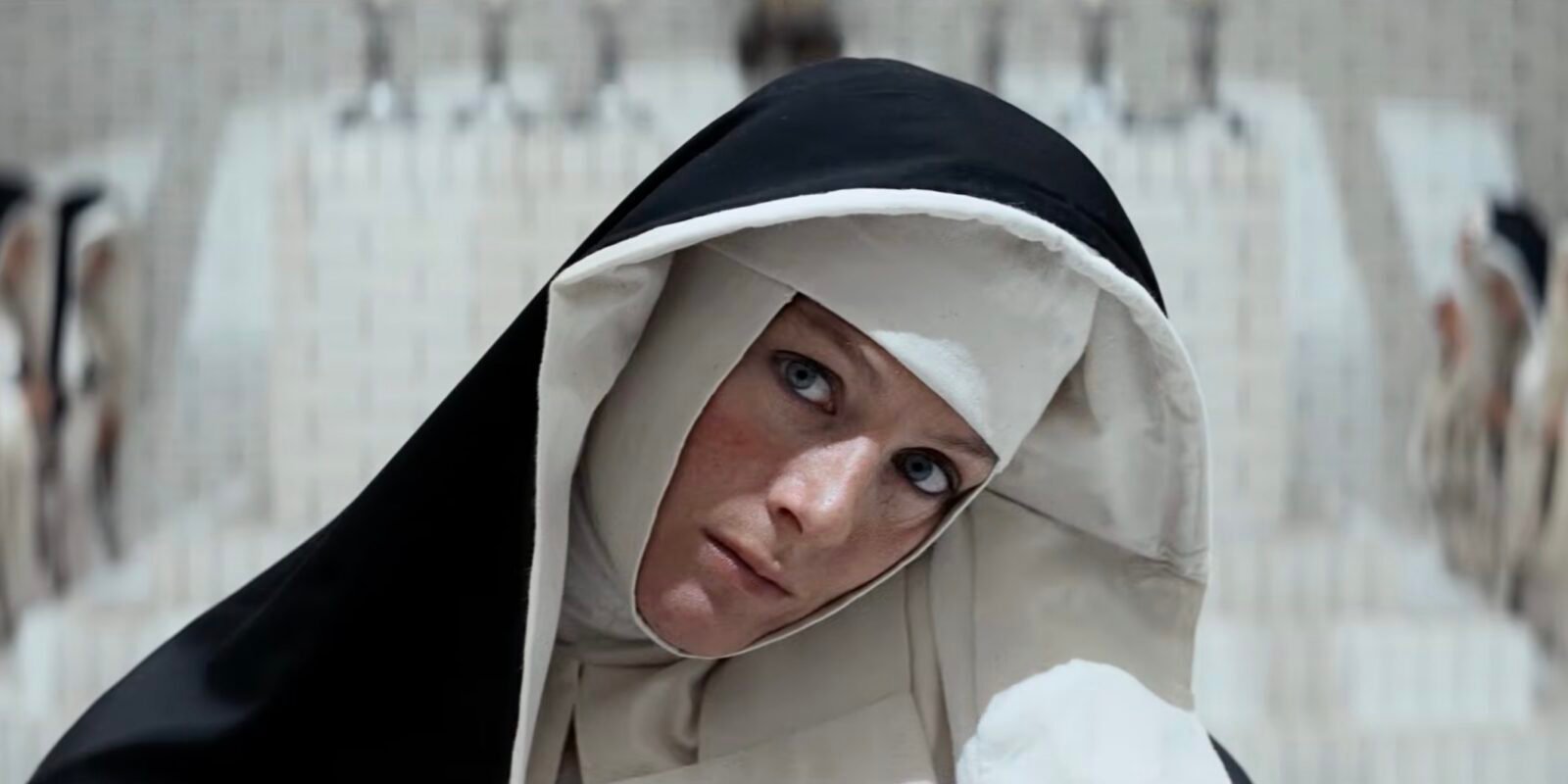
Within this film’s 114-minute runtime is a story that makes you think on a deeper level. It allows you to connect the happenings of the 1600s to many happenings that were certainly occurring upon this film’s release in the early ’70s and continue to occur today. It’s backed up by incredible aesthetics, driven by its stunning cinematography and set pieces brought to life on the set of its filming location at Pinewood Studios in London. But it’s also got incredible acting. Oliver Reed is fantastic as Grandier. But it can easily be agreed upon that the show-stealer is Vanessa Redgrave as Jeanne. From the moment she appears on screen in a menacing fashion, to her menacing laugh that she utters out, to the fact that, due to our character’s physical condition, she has to keep her head tilted throughout the entire performance, it is reflective of her dedication to the role, not just through her dialogue, the themes her character represents, but even her physicality.
The Devils is a haunting piece of historical filmmaking that sticks with you long after you’ve watched it. Its themes echo into the present day. Seeing this on a big screen in glorious 4K, in a packed, sold-out theater, was incredible. What was just as incredible is that every single audience member was locked onto the screen for the entire duration of the film. Not a cell phone in sight. Not a conversation to be heard. Just a collective of people experiencing a movie the way it was intended to be experienced, taking in its story and themes without a single distraction. I highly recommend venturing to your local multiplex to experience this film.Ken