
Netflix has become the crème de la crème when it comes to true crime. The studio has seemingly perfected the formula, particularly with its documentary series and shows within the genre, which audiences continue to devour. So, it was perhaps inevitable that Netflix would try to translate that success to feature-length films. Unfortunately, its latest attempt, Unabomber, leaves a lot to be desired. In turning the true story of notorious domestic terrorist Ted Kaczynski into a far too short feature-length drama, the film transforms an inherently fascinating and disturbing subject into something undercooked, surprisingly dull, and ultimately bland.
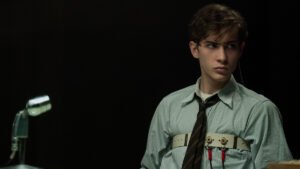
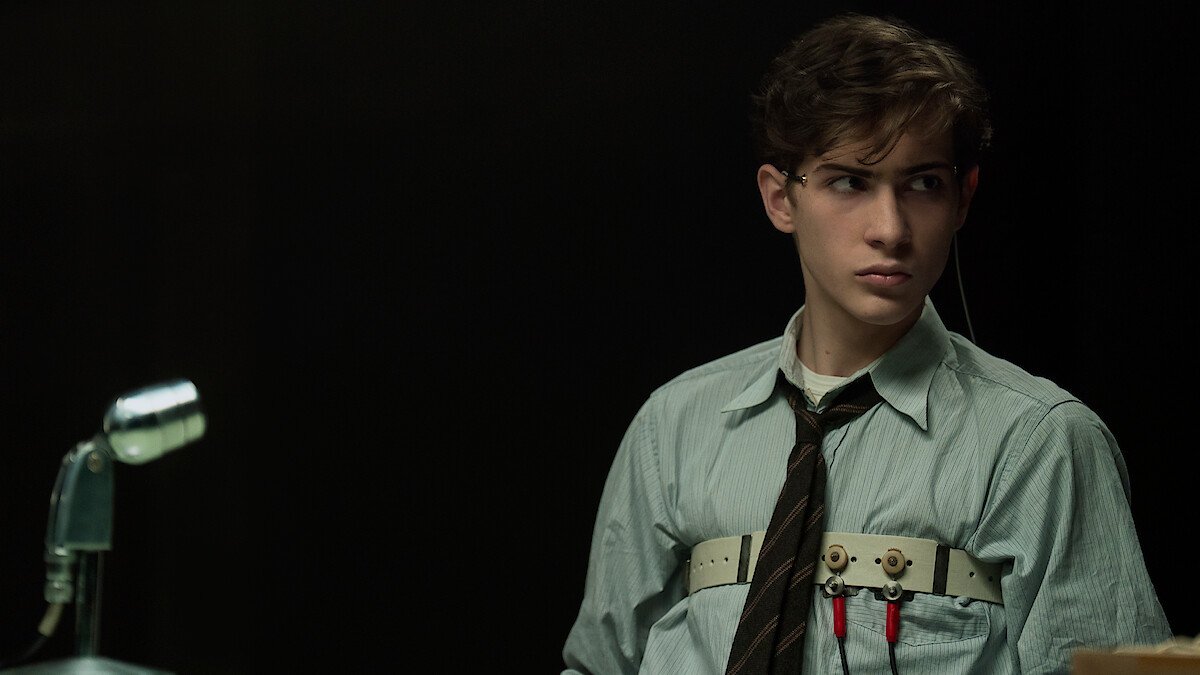
Unabomber follows a non-linear timeline, telling two distinctly different stories. The first focuses on Ted Kaczynski’s (Jacob Tremblay) formative years at Harvard, where he was considered a math prodigy and showed a great deal of interest in psychology and philosophy while studying under renowned Professor Henry Murphy (Russell Crowe). It’s there that Kaczynski becomes the subject of one of Murphy’s studies, which turns out to be far from what it seems. The experience proves to be a breaking point, as his already growing disdain for the world begins to intensify.
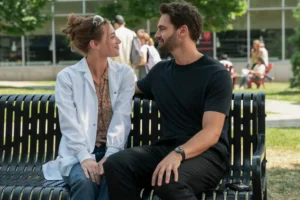
The second timeline is set in 1995 and predominantly follows FBI agent Joanne Miller (Shailene Woodley) during the increasingly desperate manhunt to uncover the true identity of the Unabomber. Miller is drafted in after years of the investigation hitting brick walls. She quickly finds out why, with many of her colleagues set in their ways and unwilling to take her ideas on board. That leaves Miller largely on her own as she attempts to drive the investigation forward.
The story behind the mind of Ted Kaczynski is a fascinatingly complex one that was always going to be difficult to communicate through a feature-length movie. Just how difficult becomes abundantly clear in Sam Chalsen and Nelson Greaves’ screenplay. It tries to fit the incredibly intricate two-story arc into just 92 minutes, ensuring many of the more intriguing elements never receive the attention they deserve.
That’s especially apparent during Ted’s formative years. The film shows his growing contempt for the world beginning at an alarmingly young age. It does a good job of showing how the increasing role of corporations in citizens’ lives disturbs Ted, with his anger deepening as that interference becomes progressively more invasive. It clearly positions this as part of the development of the worldview that would later define him, but never has enough time to properly explore it.
Kaczynski’s admiration for Henry Murphy is another intriguing element, particularly in how being included in his study initially feels like a special moment for him. It’s within this experiment that some of the movie’s strongest moments are found, particularly during the heated debates Kaczynski has with his older fellow students. That makes it all the more frustrating when one scene between Jacob Tremblay and Russell Crowe in the final act easily becomes the highlight of the entire movie, yet feels over almost as soon as it begins.
Much of the problem with Unabomber, though, stems from its non-linear structure. When utilized well, this approach can make a movie feel fresh and engaging, but here it sucks much of the life out of everything good. Just as the formative years begin to become genuinely intense, audiences are ripped out of the immersion as the film flips back to 1995.
It’s definitely not helped by how uninspired the 1995 storyline is. A manhunt for one of the most infamous domestic terrorists in American history should be completely compelling and have audiences hooked. Unfortunately, it feels more like a distraction from the far more absorbing exploration of Kaczynski’s earlier life. Much of the FBI investigation is forgettable, and even the breakthrough that eventually leads investigators to Kaczynski feels predictable and underwhelming.
The immersion is further ruined by how beautifully clean everything looks. In both 1958 and 1995, the visuals are so crisp and polished that there’s none of the grit you’d expect from either period, just the sheen and gloss of a modern-day blockbuster. The costume design does little to help, and the hairstyling is particularly distracting. Neither does enough to convincingly evoke the respective eras, instead looking exactly like what you’d expect to see in a contemporary production.
Even from a technical standpoint, particularly when it comes to the score, Unabomber misses the mark. From the very beginning until the bitter end, the music is distracting and generic. During the more frantic sequences, it becomes loud and obnoxious. It’s equally intrusive during the quieter, dialogue-heavy scenes, where it has all the grace of a bull in a china shop as it threatens to drown out some of the most important exchanges.
It’s a shame that so much of the movie wastes some genuinely good performances, particularly from Jacob Tremblay and Russell Crowe. Tremblay is captivating throughout, perfectly capturing the awkward teenager the film portrays Kaczynski as while also possessing the necessary nous to turn on the intensity at the flick of a switch when the tone calls for it. Crowe matches Tremblay’s energy, and whenever the pair are on screen together, the film finally finds an enjoyable rhythm.
Shailene Woodley, meanwhile, definitely isn’t helped by the material she’s given. She can only work with what’s on the page, but while Crowe and Tremblay manage to elevate what they’re handed, Woodley never threatens to do the same. As a result, the FBI portion feels flat, becoming more of a distraction from the story we actually want to watch.
A story about the infamous Unabomber should be an automatic slam dunk, but Unabomber never gives its subject enough room to breathe. This is a story compelling and complicated enough to have warranted a multipart series, one that could have properly explored who Ted Kaczynski was and how he eventually became the Unabomber. Instead, there are only glimpses of what could have been, mostly whenever Tremblay and Crowe share the screen. Ultimately, it’s a major disappointment.