
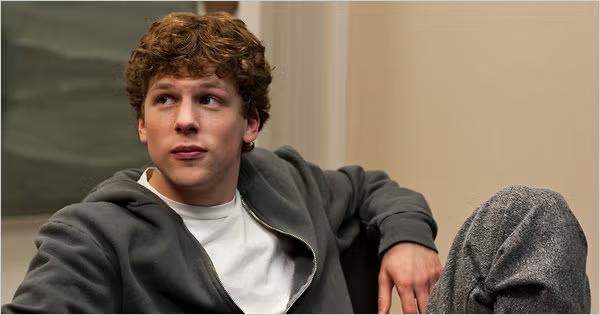
There are three distinct creative qualities that truly bring out the immersive and euphoric nature of The Social Network. I not only find it to be the best film of 2010, it’s the best film of the 2010s altogether, and its relevant nature echoes far beyond its initial release when you look at the monster Facebook has become today. With its follow-up, The Social Reckoning, landing in theaters this weekend, I feel it is mandatory to revisit and reflect on it.
The first element that brings this film to life is Aaron Sorkin’s script, which applies the very identifiable nature of the way his dialogue flows. Every word, beat, and the way the actors deliver it almost feels entrancing as it explores the film’s themes of self-centered desires, greed, and the desperate pursuit of elitism. In the process, it effectively tells audiences the true story of how Mark Zuckerberg weaseled his way into becoming the proprietor of Facebook. Some of the people he screws over are just as unlikable as he is, but perhaps one in particular, Eduardo Saverin, can be seen as the victim of the story, along with the many people he mistreated, which certainly planted the seeds for how cold of an environment Facebook is today.
David Fincher’s direction is meticulous, technical, and perfectly paced. It allows the film to play out in a rhythmic fashion. In the process, it delivers an experience, whether your first or tenth viewing, that makes you feel like you’re in a euphoric trance. You almost feel like you’re halfway between a dream and a nightmare, observing a collective environment of people you don’t like, drawn in by its intense nature. On paper, it’s a legal drama, but Fincher’s direction allows it to play out like a techno-thriller.
Last, but most certainly not least, the entrancing and euphoric, yet haunting score from Trent Reznor and Atticus Ross. As the mastermind of successful industrial musical act Nine Inch Nails, Reznor channeled his experience with electronic music to deliver a musical score that reflects the underlying themes of how the film explores the growth of technology.
Those notes that play during the opening credits live in your head rent-free. You feel a sense that this creation is going to go to eerie places. You know a conflict is about to arise, and that conflict stretched far beyond the courtroom battle for the ownership of Facebook, going into the societal damage that Facebook would do nearly two decades after this film’s release.
Today, I find it to be such a travesty that David Fincher did not win the Oscar for Best Director. It’s an equal travesty that this film did not win Best Picture in 2010. But something I’ve always said is that the Oscars are not the end-all be-all of what the best of any year is. As much as I admire The King’s Speech, I don’t think it has come close to the memorability or relevancy that The Social Network has.
This is a film that people still talk about. They harken back to it as they see what social media has done to our culture. The creative collaboration between Fincher, Sorkin, Reznor, and Ross created the perfect storm of thought for an audience that perhaps may have been oblivious to what Facebook would become today, including myself. I don’t use the term masterpiece lightly, and David Fincher has made many great films, but there are three on his résumé that I truly consider to be masterpieces… Se7en, Zodiac, and The Social Network.