
Lee Cronin’s The Mummy has been met with much anticipation by horror lovers and cinephiles alike, which is completely understandable. After all, Cronin masterminded Evil Dead Rise as his sophomore project, a film that was a resounding success both critically and financially. So it should come as no surprise that everyone wants a piece of the Lee Cronin pie, and this time it is horror powerhouses Jason Blum and James Wan backing the latest project that, put frankly, is bound to be divisive, and not just because there is no Brendan Fraser cameo.
Lee Cronin’s The Mummy follows the Cannon family, made up of dad Charlie (Jack Reynor), mum Larissa (Laia Costa), and their two children Katie (Natalie Grace) and Sebastian (Shylo Molina). From the outside looking in, they are a loving family enjoying life in Cairo thanks to Charlie’s job as a television journalist. While it all seems like a dream come true for the Cannons, that dream soon turns into a nightmare when Katie is abducted from the garden, leaving the family helpless.
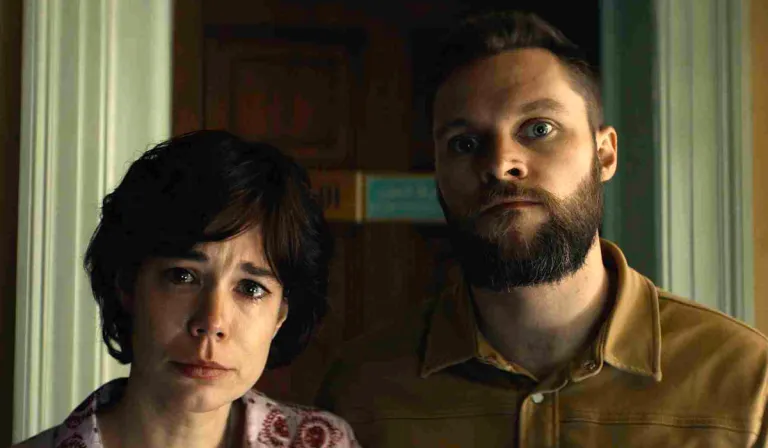
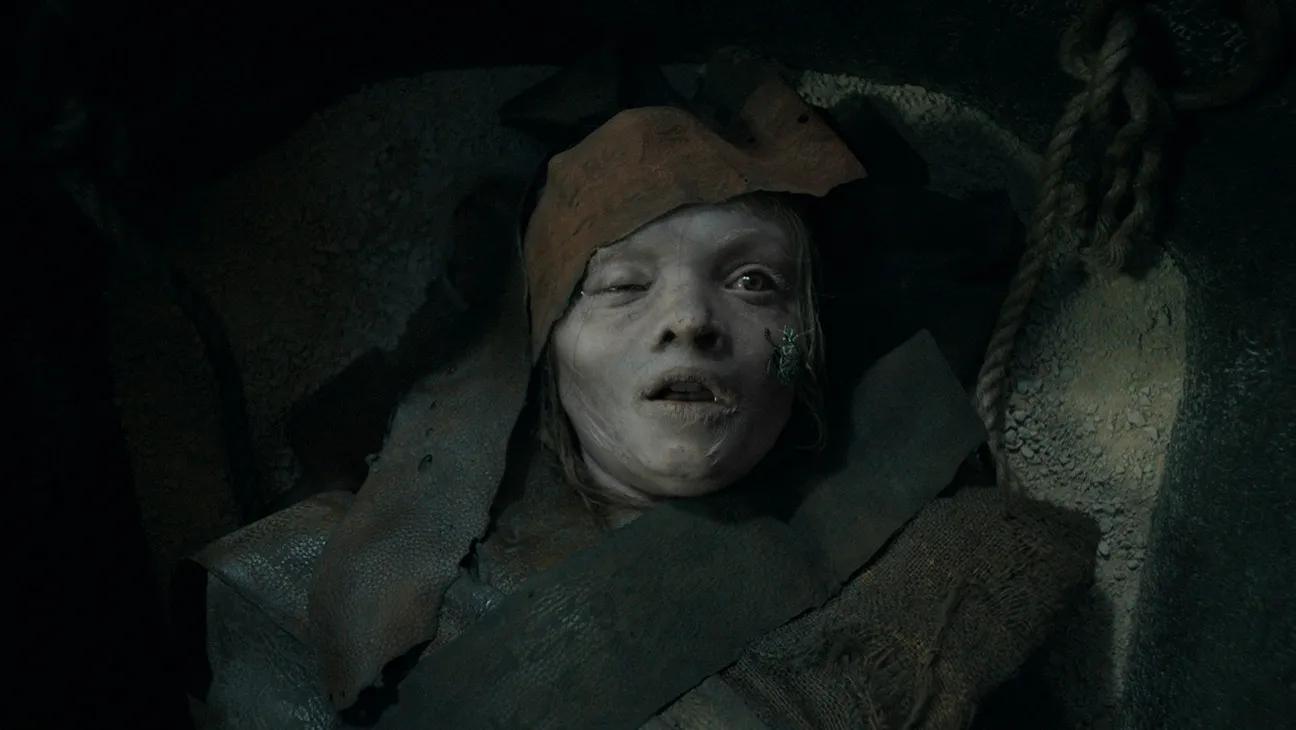
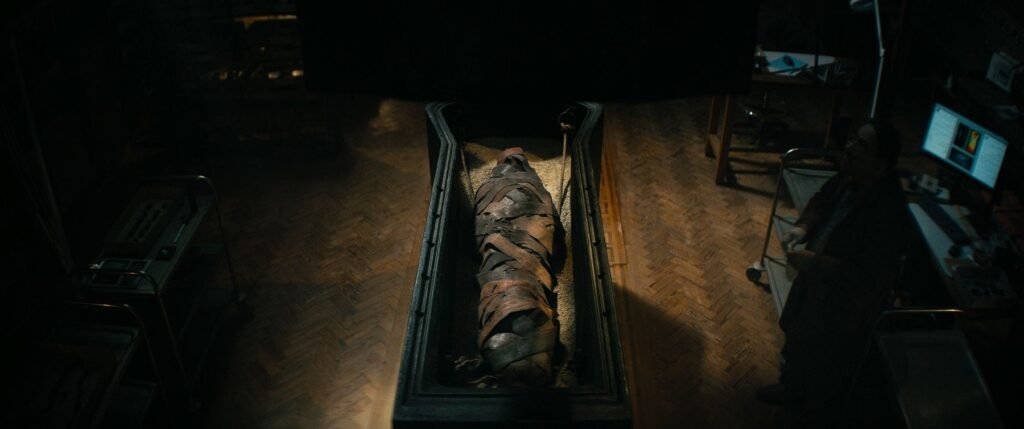
The film fast forwards eight years, with the family now one stronger thanks to the addition of daughter Maud (Billie Roy), all still struggling, particularly Charlie, who continues to suffer from the unresolved grief of not knowing what happened to Katie and the internal blame game parents go through when they feel so powerless. That is until Katie is unexpectedly found in an Ancient Egyptian coffin in the mummified state seen throughout the extensive marketing campaign. Her return to the family should mark the happy ending to a torturous story, but instead something far more sinister is now lurking inside the walls of the Cannon home.
The story of The Mummy can be sliced down the middle like a cake, with its two distinct halves being completely opposite, taking on a very similar tone to Cronin’s Evil Dead Rise. The first half is very drama heavy, focusing on the trauma and loss the family is facing and the subsequent changes that occur when Katie returns, along with the complexities that come with it. It is an emotional rollercoaster that, while it goes on for too long and feels like a drag at times, still lands most of its emotional punches. The second half is entirely different, filled to the brim with sick gore that is bound to make even the hardiest individuals’ toes curl at the gruesome nature of what is unfolding.
While there is a lot of Egyptian lore on display throughout The Mummy, what audiences have previously seen in films related to Egyptian mummies is not what is on offer here. Instead, Cronin takes Katie’s mummification and turns it into something more akin to the paranormal horrors we have seen before. With that comes the familiar tropes of mysterious movement, doors slamming on their own, and the possession of others. The paranormal nature of the film may be met with disdain, as audiences going in not knowing what to expect will be completely blindsided by its direction.
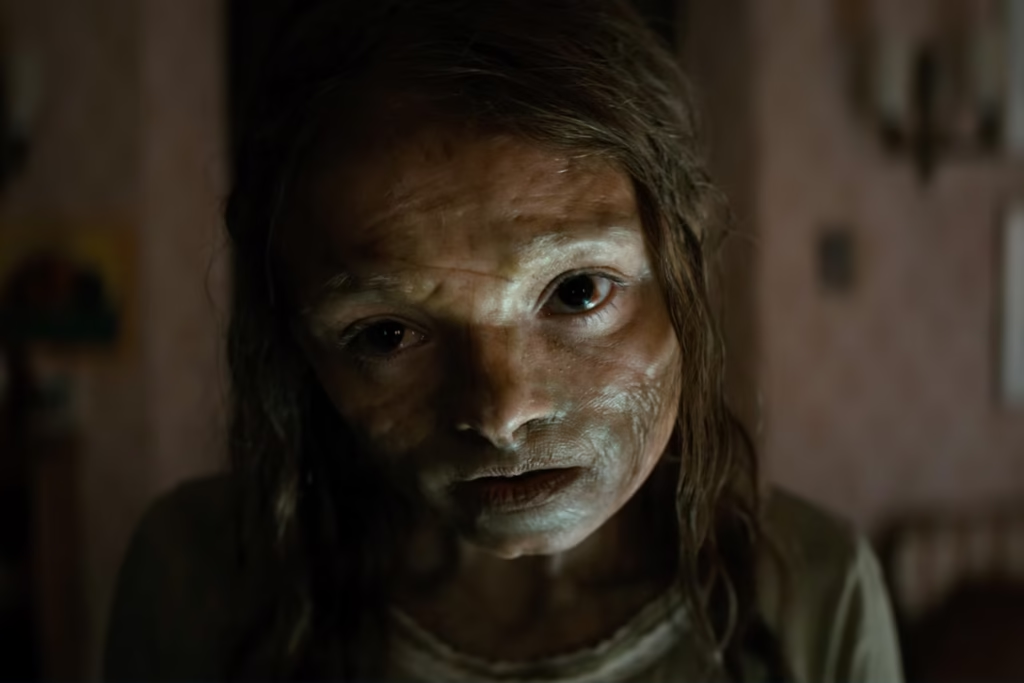
The horror elements, while providing some of the most disturbing scenes you are likely to encounter all year, with one particular moment involving toenails being especially gag worthy, never really feel scary. It is far more focused on being disgusting and unnerving than outright terrifying, never truly delving into any psychological horror, which feels like a missed opportunity. There are a few well choreographed jump scares, but they are few and far between, with the drama and paranormal elements given priority, which may disappoint horror fanatics expecting a terrifying experience.
Perhaps The Mummy’s biggest sin is its pacing. The first and second acts in particular often feel very lethargic, and some may struggle to stay invested in the story. While the build up was certainly necessary, there is arguably ten to fifteen minutes of fluff that could have been trimmed away without affecting the depth Cronin was aiming for, while also helping the overall flow. That said, audiences who stick with The Mummy will be greatly rewarded, as the final act is a rip roaring good time and throws in a few curveballs for good measure.
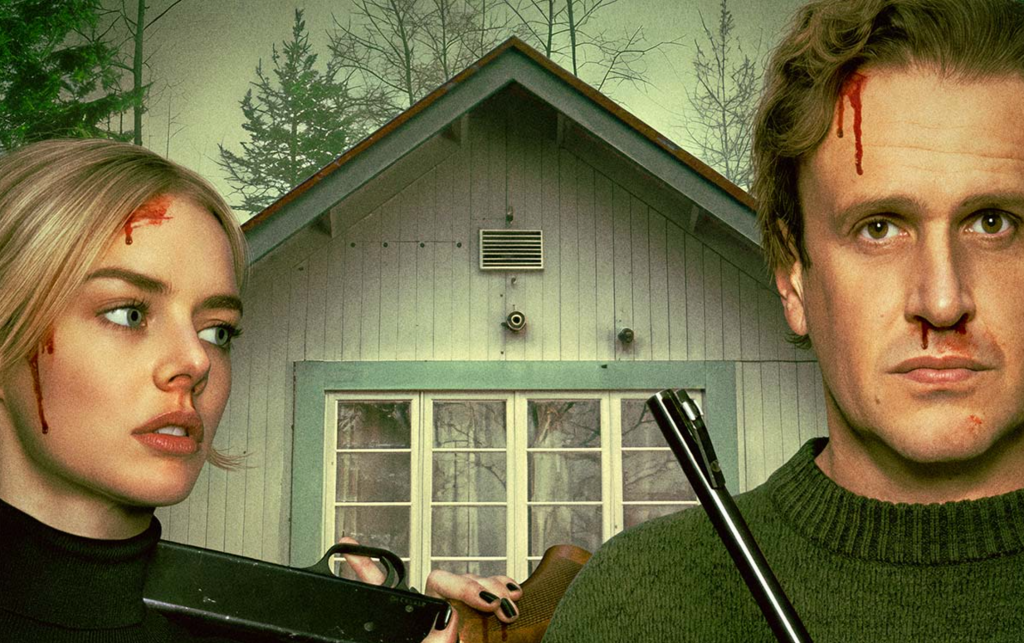
Undoubtedly though, where The Mummy shines brightest is in its technical aspects. It is beautifully shot, and fans of split diopter shots will be delighted with plenty of them to feast on, including shots of a videotape and a pair of headphones, my personal favourites. The sound design is impeccable throughout and does create some unnerving tension at times that is desperately needed. A special shoutout also needs to go to the makeup department, who have outdone themselves here. With awards bodies now taking a much keener eye to horror as a whole, it is not beyond the realms of possibility that The Mummy’s makeup may just enter the conversation.
The performances are also a really enjoyable element of the overall experience. Of course, Natalie Grace shines brightest in a phenomenal turn as a mummified child. I cannot remember the last time a kid of Grace’s age made me feel as uncomfortable in the cinema as this, and that is the highest possible praise to give her in this leading role. Jack Reynor is also a standout, fully committed and showing why he deserves to be in more films.
While some may leave Lee Cronin’s The Mummy somewhat underwhelmed, fans of Cronin’s previous work will likely be delighted with his latest entry. Despite The Mummy’s flaws, of which there are quite a few, particularly its failure to tie all the strings together in its finale, it is still an enjoyable cinema experience and one that is bound to live long in the memory thanks to its many deeply disturbing gory scenes.