
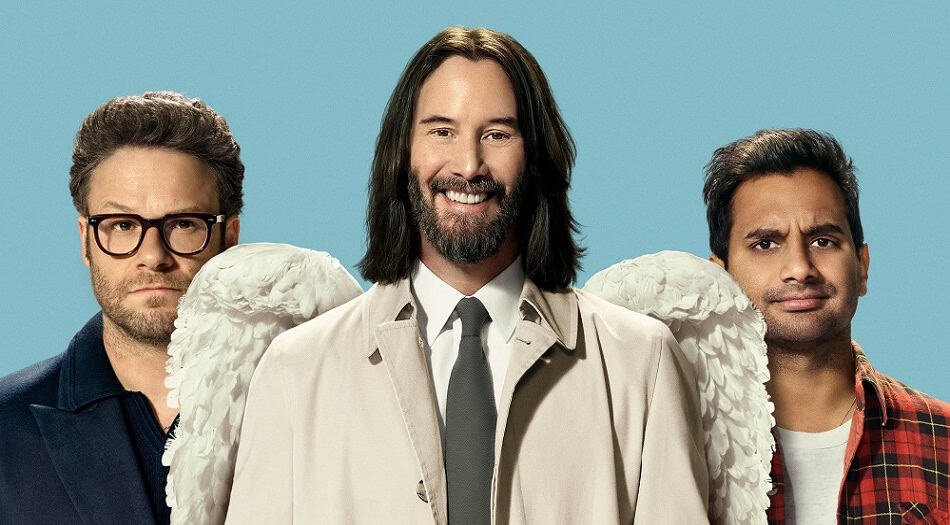
Reviews
Good Fortune
You might be forgiven for expecting Good Fortune to be a light-hearted comedy with little substance beyond a few laughs. And while it certainly delivers plenty of those, you would be mistaken to think that is all it offers. At its core, the film provides some of the sharpest and most relevant social and economic commentary to come out of Hollywood in recent years, something Aziz Ansari, in his directorial and feature-length writing debut, should be extremely proud of.
The main story unfolds much as the trailer suggests. We meet Arj, played by Ansari himself, an ordinary American struggling to make ends meet. Out of work from his main career as an editor, he juggles several part-time jobs just to stay afloat. During one of these, cleaning the garage of a self-made tech entrepreneur in the Hollywood Hills named Jeff (Seth Rogen), Arj manages to talk his way into a short-term position as Jeff’s assistant. Unfortunately, after a brief and ill-judged misuse of Jeff’s corporate card, Arj finds himself once again unemployed.
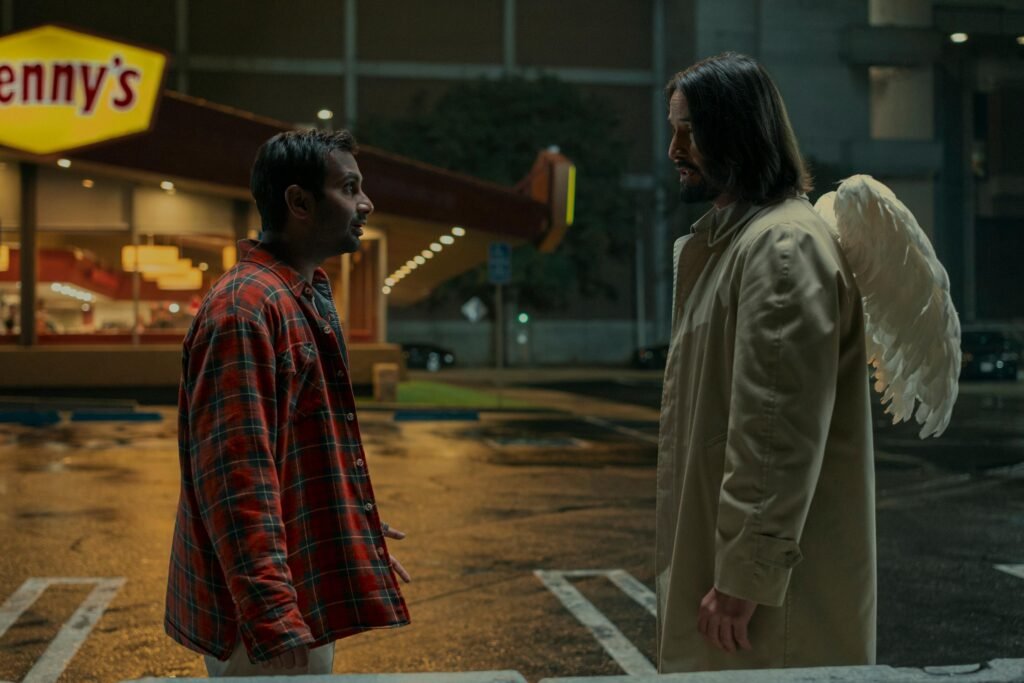
At his lowest point, when all hope seems lost, Arj receives an unexpected visit from the angel Gabriel, played by Keanu Reeves, whose usual heavenly duties involve preventing people from texting while driving. Gabriel offers Arj a glimpse into his future, but when Arj is unimpressed by what he sees, Gabriel decides to teach him a lesson. In a Freaky Friday style twist, Arj and Jeff swap lives, setting off a series of comic, chaotic, and surprisingly insightful events that form the heart of the story. This act, however, leads to Gabriel being banished and stripped of his wings for interfering beyond his jurisdiction, leaving him to live with Jeff as someone struggling to get by.
While Good Fortune takes a little while to find its rhythm, with the opening act feeling somewhat slow, the film truly shines once the switch takes place. The scenes with Arj are amusing as he revels in his newfound wealth, but it is the interactions between Jeff and Gabriel where Good Fortune exceeds expectations.

Throughout, Ansari’s screenplay makes it clear that the underlying theme focuses on the harsh social and economic realities faced by ordinary people. The once attainable American Dream has become exactly that, a dream, and the divide between the classes feels wider than ever. Ansari does not hold back, taking aim at the gig economy in particular and exposing how hardworking individuals are underpaid, undervalued, and treated as expendable commodities designed only to make the wealthy even richer.
It would be easy for this to come across as patronising, given that it was written by someone in Hollywood who likely does not have to live paycheque to paycheque while juggling multiple jobs. However, Good Fortune avoids that pitfall, largely due to the people involved both on and off screen. Keanu Reeves, the perennial Hollywood good guy, and Seth Rogen, a vocal advocate for numerous causes, are inspired casting choices. Their performances bring authenticity to a complex topic and prevent the film from feeling insincere, something that could easily have happened with a lesser cast.
Ansari himself, who did not necessarily come from a deprived background, ensures that some of the humour is directed at people as fortunate as he is. This self-awareness adds humility and perspective, helping the film connect more deeply with its audience.
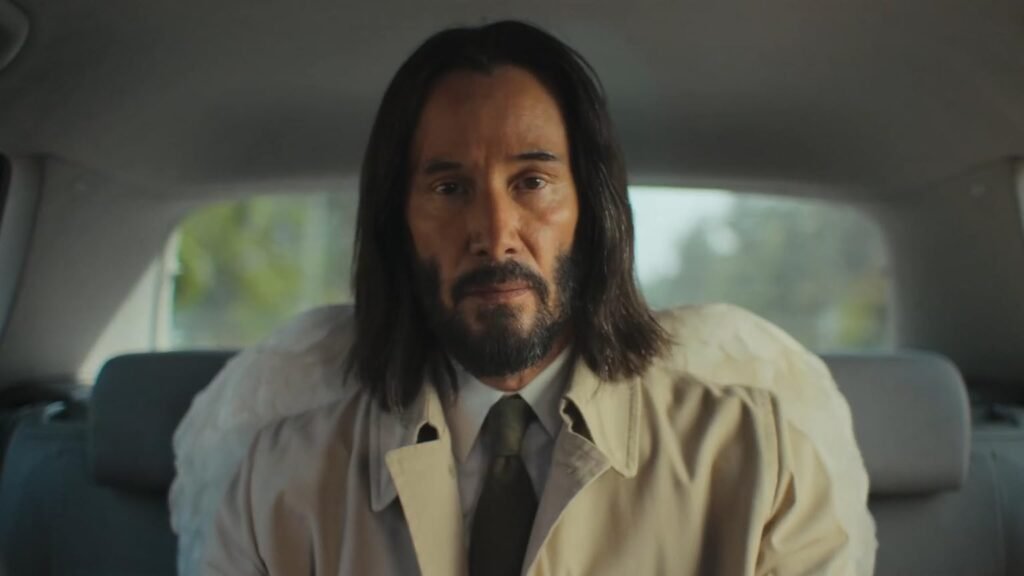
Viewers will also be pleased to know that Good Fortune is, for the most part, genuinely hilarious. Once the plot gains momentum, the laughs come thick and fast. The scenes featuring Reeves and Rogen stand out in particular, with Reeves showcasing a brilliant sense of comic timing that makes me hope to see him in more roles like this. There are very few moments when audiences will not be laughing, especially once past the slower start.
While the messaging may feel slightly overstated at times, in a world where day-to-day life is becoming increasingly difficult, particularly financially for many across the globe and not just in America, Good Fortune offers a timely and meaningful voice. It feels grounded in the struggles of ordinary people and provides a much-needed 98-minute escape filled with laughter and, perhaps most importantly, a glimmer of hope that not all is lost.