
Reviews
Dead Man's Wire
After an eight year hiatus from feature films, Gus Van Sant returns with an adaptation of one of the wildest true stories of the 1970s. Dead Man’s Wire is the kind of film that, had I not seen these events unfold before my own eyes, I would struggle to believe it ever actually happened. That feeling only intensifies as the circumstances spiral into something almost unthinkable, even in the chaotic world we are living in right now.
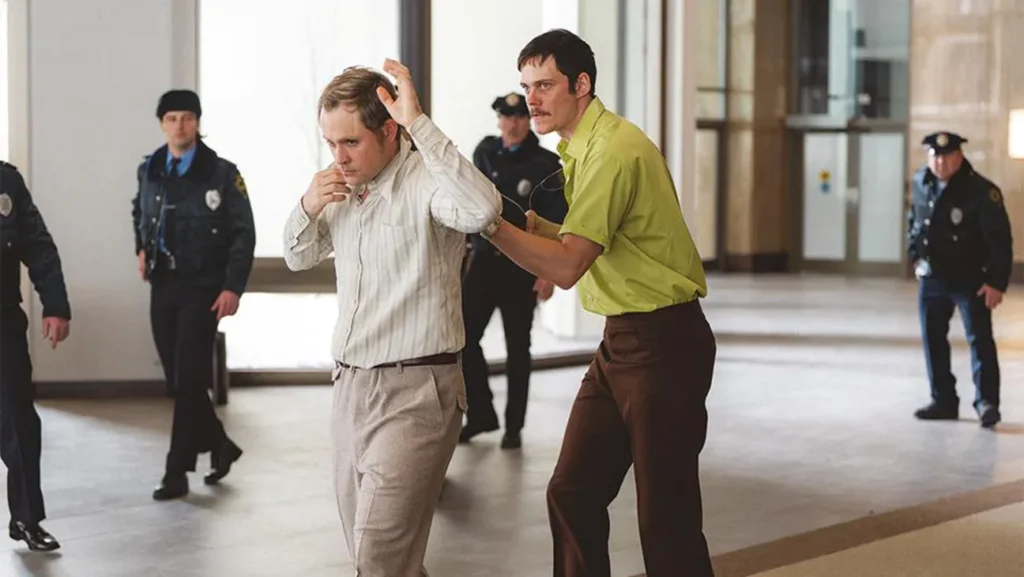
Van Sant wastes no time on his comeback. There are few films in recent memory that hit the ground running quite like this and within the first ten minutes Dead Man’s Wire is already in full sprint. Down on his luck Tony Kiritsis (Bill Skarsgård), has kidnapped Meridian Mortgage president Dick Hall (Dacre Montgomery), parading him through the streets of Indianapolis with a shotgun wired to his neck as police and opportunistic news crews look on in disbelief.

Kiritsis believes he has been royally screwed over, largely by Hall’s father M.L. Hall (Al Pacino), after a business deal leaves him drowning in debt. With no other options left, his hostage plan becomes a desperate attempt at escape. Demanding five million dollars and a public apology from Meridian, Kiritsis smuggles Dick into his explosives laden apartment, where the pair remain locked in a tense standoff awaiting the next move.
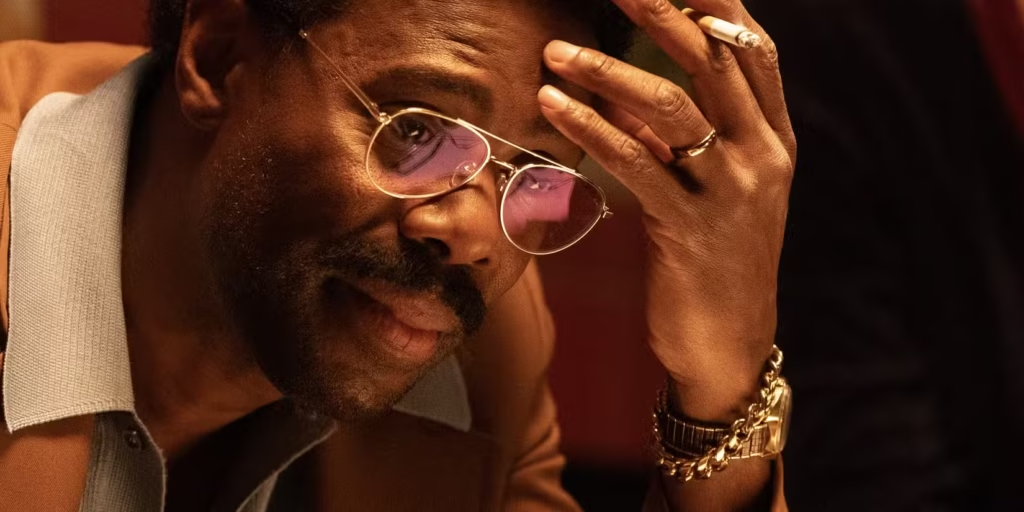
The film focuses on the following sixty three hours, during which Kiritsis refuses to budge. Despite being confined to only a handful of locations, the tension never dips and the sense of anxiety remains constant. The police negotiations add an engaging layer to the story, particularly through Kiritsis’ detective friend Michael (Cary Elwes), and ambitious local TV reporter Linda (Myha’La), who is eager to exploit the situation for her own gain. Still, the most compelling subplot belongs to Colman Domingo as Fred Temple, an Indianapolis radio legend and Kiritsis’ hero and confidant throughout the ordeal.
As events unfold, the strength of the writing and the sharp dialogue make it difficult not to feel some sympathy for Tony. This is not the story of a crazed lunatic chasing fame or fortune, but of a man taking a final, desperate swing at correcting a perceived injustice. The familiar tale of a corporate giant crushing the little guy runs through the film, and it comes as little surprise that public opinion begins to frame Tony as something of a local hero for standing up to power.
Skarsgård arguably delivers a career best performance as Tony. He is intense when required, genuinely frightening when his anger peaks, yet his line delivery is precise and occasionally very funny. Montgomery rises to meet him, with the scenes they share easily the film’s strongest. And once again, to absolutely no one’s surprise, Colman Domingo steals every scene he is in. I would happily listen to a smooth jazz station day and night if it meant hearing Domingo host it.
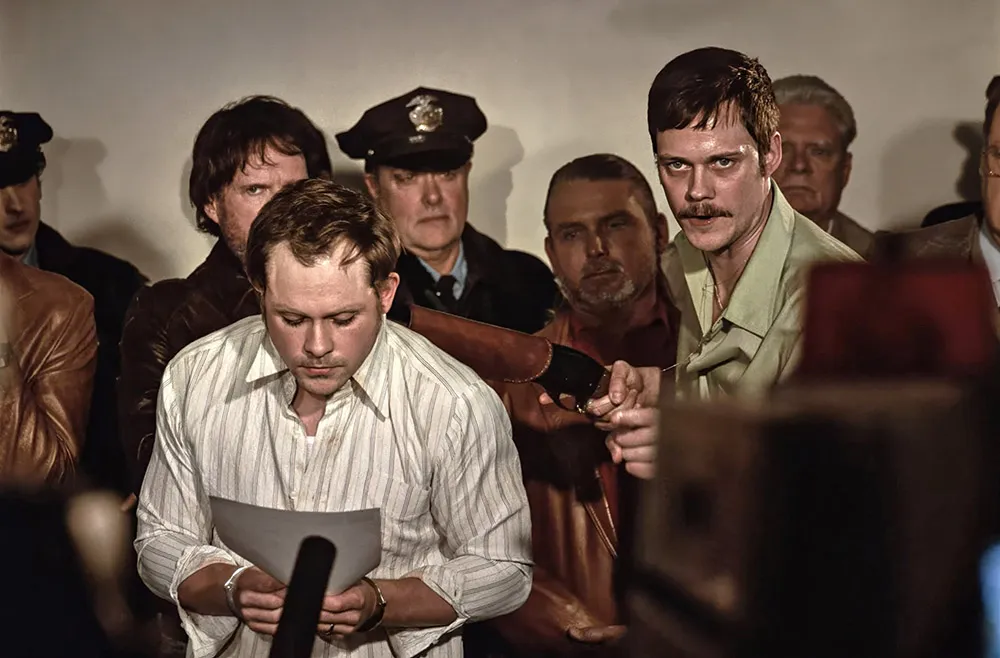
The 1977 aesthetic is realised beautifully, with the cinematography standing out as one of the film’s greatest strengths. The film regularly shifts between grainy period visuals, staged stills and photographs, immersing the audience and making the events feel as though they are unfolding in real time. It is slick, visually pleasing and a consistently rewarding element of the experience.
While it feels as though a few minutes could have been trimmed from the 105 minute runtime without harming the overall quality, Dead Man’s Wire maintains its tension and style throughout. The result is a gripping crime thriller with a truly bonkers ending that would feel unbelievable if it were not rooted in truth. And if Gus Van Sant’s return is not enough to get you in a seat, Bill Skarsgård at his very best certainly should be.