
Reviews
Christy
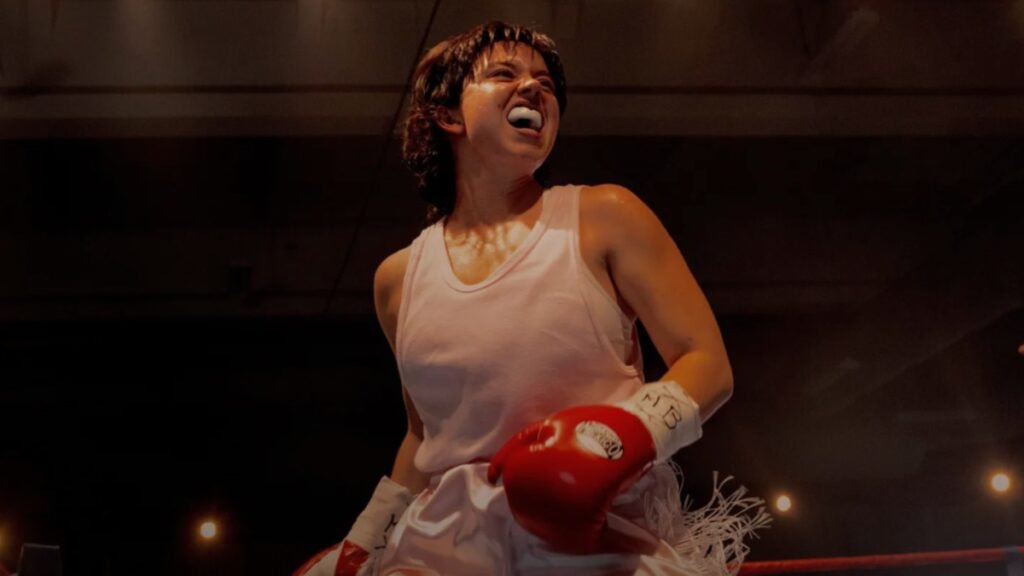
Boxing movies and sporting biopics are plentiful, but on paper, a film about Christy Martin, the woman who almost single handedly brought women’s boxing into the mainstream, should be a winner. However, despite landing a few solid punches and swinging for the fences, Christy struggles to deliver the knockout blow it so desperately seeks. In its attempt to join the ranks of great sports biopics, it too often feels like one you have already gone twelve rounds with.
Christy is the latest offering from director David Michôd (Animal Kingdom), working alongside writer Mirrah Foulkes to recount the true story of Christy Martin, played by Sydney Sweeney. The film traces her journey from an upbringing in an extremely conservative and traditional household to a meteoric rise through the boxing ranks, achieving superstardom as one of the most feared and recognised female fighters of all time. Yet the focus of the film is less on her career than on the abuse she suffered at the hands of her husband and coach, Jim Martin (Ben Foster), and the suffocating control he exerted over every aspect of her life.
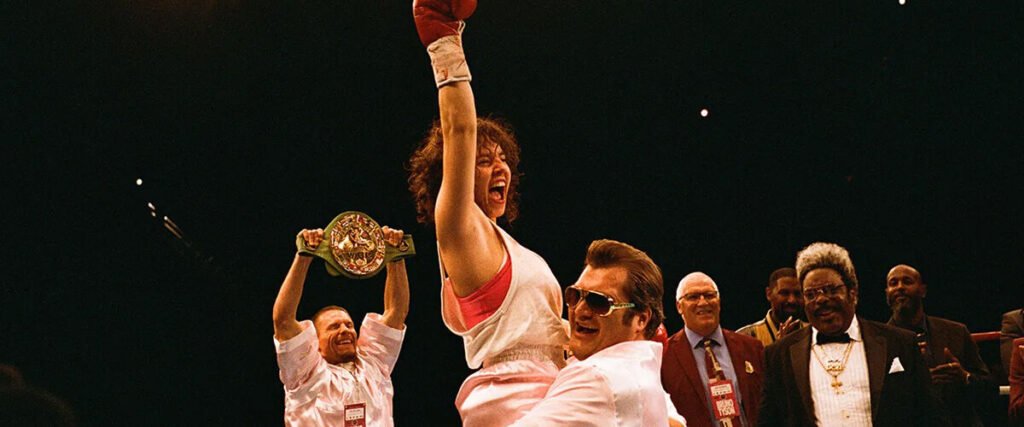
A story as remarkable as Christy Martin’s deserves a thorough exploration of how she became one of the most influential fighters in history, regardless of gender. Instead, the first two acts, in particular, play out like a by the numbers sports biopic that fails to bring anything new to the genre and may prevent some viewers from fully investing in what is, at its core, a harrowing true story.
For the most part, Christy feels like a whistle stop tour through three decades of her life at breakneck speed, reducing her boxing career to a montage of training, triumph and inevitable setbacks. There are occasional glimpses into her struggles with her sexuality in West Virginia, with her parents Joyce (Merritt Wever) and John (Ethan Embry) embodying the narrow minded figures more concerned with reputation than understanding their daughter. Even the abuse from her trainer and husband in the first two acts is mostly brushed over, appearing as brief, fragmented snippets between the fight sequences.
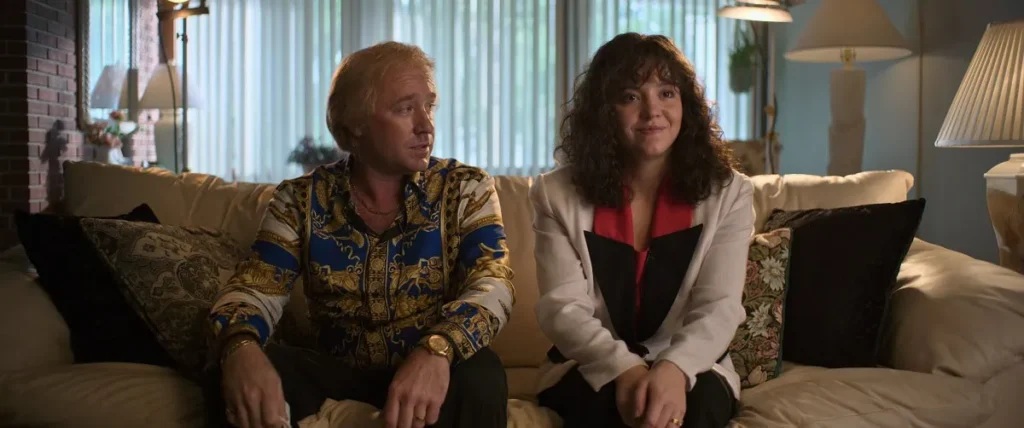
Key figures in Christy’s life, such as her first love Rosie (Jess Gabor), fellow boxer and now wife Lisa (Katy O’Brian), and legendary promoter Don King (Chad L. Coleman), are largely underdeveloped. Each receives minimal screen time, contributing little to the story despite being central to Christy’s real life journey.
Credit where it is due, the final act is where the movie truly shines. The scale of the sexual, physical and psychological abuse that Jim inflicts becomes much more apparent. Revenge porn, domestic violence and his other horrific acts are laid bare, and Michôd does not shy away from depicting these events. This section also examines Christy’s struggle to be accepted for her sexuality, particularly the homophobic abuse from her family, which gains new weight in this act. It feels like a case of better late than never, as this part of her story had been largely sidelined during the majority of the film.
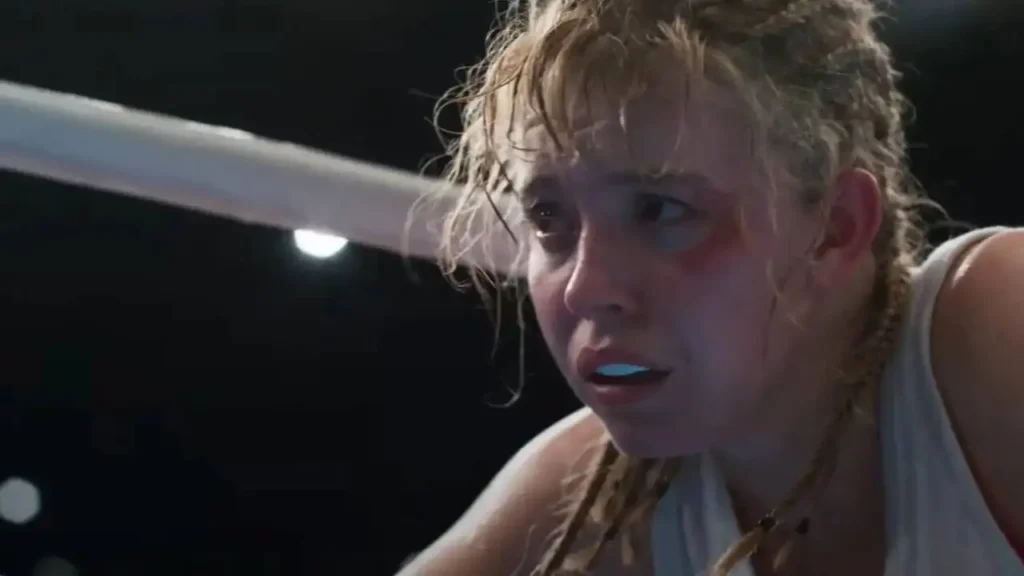
It is a shame that Christy never fully captures the revolutionary nature of its true story, especially given the strength of Sydney Sweeney’s performance. I have never personally been a huge fan of her work, but she is truly transformative here. She appears to be a woman possessed, and her boxing sequences are among the strongest moments of the film. The abuse scenes are made all the more affecting because of her commitment and emotional intensity, making it feel as though she is genuinely living through Christy’s pain.
Ultimately, even with a powerful final act that lingers in the memory, much of the runtime feels like it is ticking off familiar boxes. There is an extraordinary story at the heart of the film that is somewhat shortchanged. I would have welcomed more time exploring Christy’s battle with her sexuality and a deeper look at the trials and triumphs of her career, because that is, after all, why the audience is here. Instead, the film only skims the surface of many of the elements that make her story so compelling. In the end, it lands more as a limp jab than a meaningful uppercut.