
Reviews
Pinocchio Unstrung
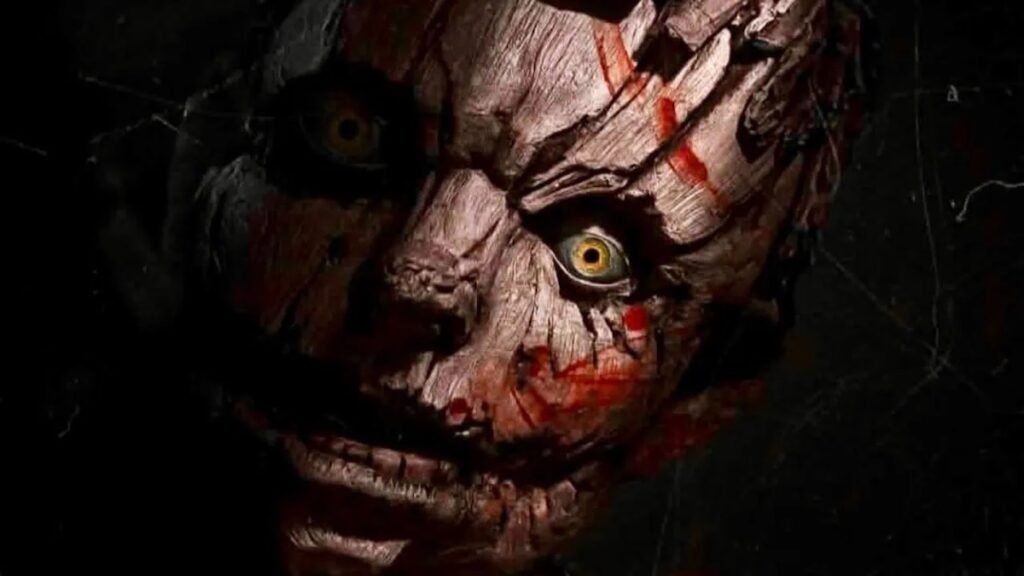
The Twisted Cinematic Universe (TCU) has been surrounded by controversy since its inception. It all began with the truly dreadful Winnie-the-Pooh: Blood and Honey, the first film of its kind to take advantage of beloved childhood characters whose IPs had entered the public domain. Little did we know that from one low budget horror flick, a whole Avengers style horror universe would be born, but here we are. The latest and fifth installment comes in the form of Pinocchio Unstrung which, with the original founder of the now cult franchise Rhys Frake-Waterfield back at the helm, you’d be forgiven for expecting another terrible entry. Instead, you may find yourself pleasantly surprised.
Billed by the studio as a “dark coming-of-age reimagining” of the legendary story, it follows a familiar path in the sense that the wooden boy possesses the innocence and curiosity of a child with dreams of becoming real. That’s where the similarities end though, because this incarnation of Pinocchio will go to any lengths necessary to achieve that dream. That includes harvesting the organs of his ever growing list of victims although, in his eyes, he’s doing the world a favour by ridding it of all the “bad” humans along the way.
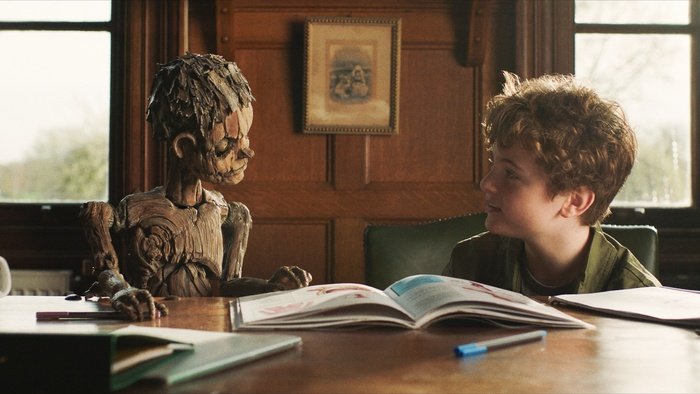
Like every other entry in the TCU to date, this is very much a budget slasher designed to deliver the most gruesome kills imaginable to keep viewers entertained. That’s where the film is at its strongest. While the victims are as underdeveloped as you might expect, with most serving as little more than cannon fodder, the inventive lengths Frake-Waterfield and his team have gone to in making each death feel as distinctive as possible is genuinely admirable.
Narratively, while it’s far from flawless, this is yet another step in the right direction. There’s a sincere attempt to tell a compelling story while giving James (Cameron Bell) and Pinocchio (Jude-Evan Lloyd) meaningful character arcs that viewers can invest in. That’s something we haven’t really seen in previous installments, which instead opted for cheap, lazy slashers that simply hurtled towards the finish line. Arguably, its biggest weakness is introducing too many narrative threads without pulling on all of them effectively enough to create the emotional impact it is clearly aiming for.
Perhaps the most welcome and unexpected element is the use of practical effects. Every TCU entry so far has been plagued by horrendous, cheap looking CGI that completely destroys any sense of immersion. This time around, however, large portions rely almost entirely on practical work in favour of a more convincing aesthetic. It doesn’t always land and there are still some noticeably rough edges, but the difference compared to Blood and Honey, released only three years ago, is night and day.
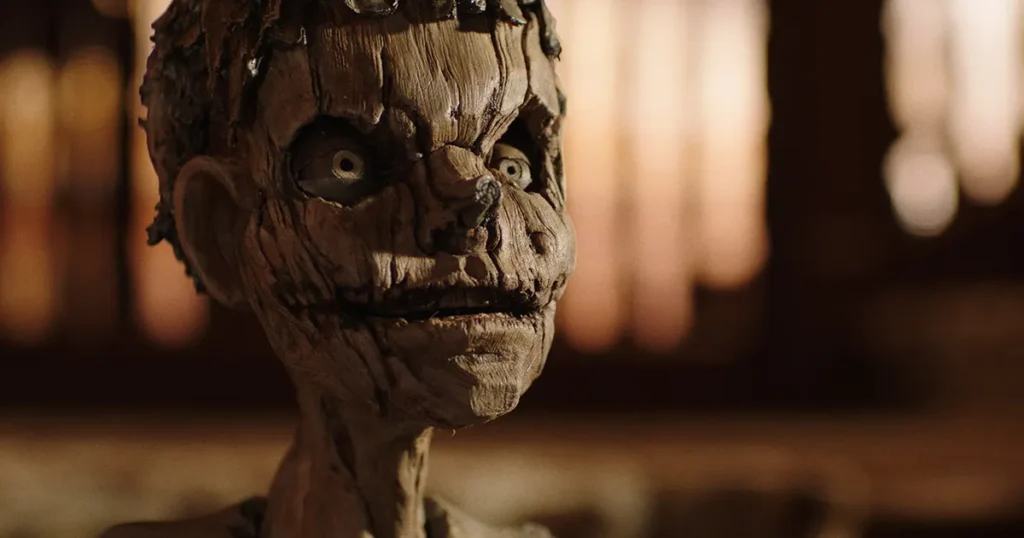
Equally impressive is the puppetry. You might have expected to see an entirely computer generated version used to keep costs down and maximise profits, much like Bambi in Bambi: The Reckoning. Instead, Frake-Waterfield opted for intricate animatronics to bring the iconic character to life. Once again, it isn’t perfect, with his movement in particular often feeling clunky, but there are several moments where the production genuinely looks as though it belongs to a much larger studio. That achievement is made all the more remarkable by the behind the scenes footage that plays alongside the end credits.
That said, other technical aspects still leave plenty to be desired. The lighting and sound design in particular, while both noticeably improved from previous outings, remain distracting at times, making it difficult to properly make out what’s happening. The score is also largely underwhelming, with Frake-Waterfield opting for one of the most generic sounding slasher soundtracks you’re likely to hear all year.
The movie does boast a much deeper and higher profile cast than we’ve previously seen in the TCU. Among the supporting players are horror icons Robert Englund and Richard Brake, who you might expect to deliver phoned in performances for an easy payday. Thankfully, that’s far from the case. While neither is producing career best work, both embrace the fun and absurdity of the material, delivering committed performances that help elevate the younger cast around them.
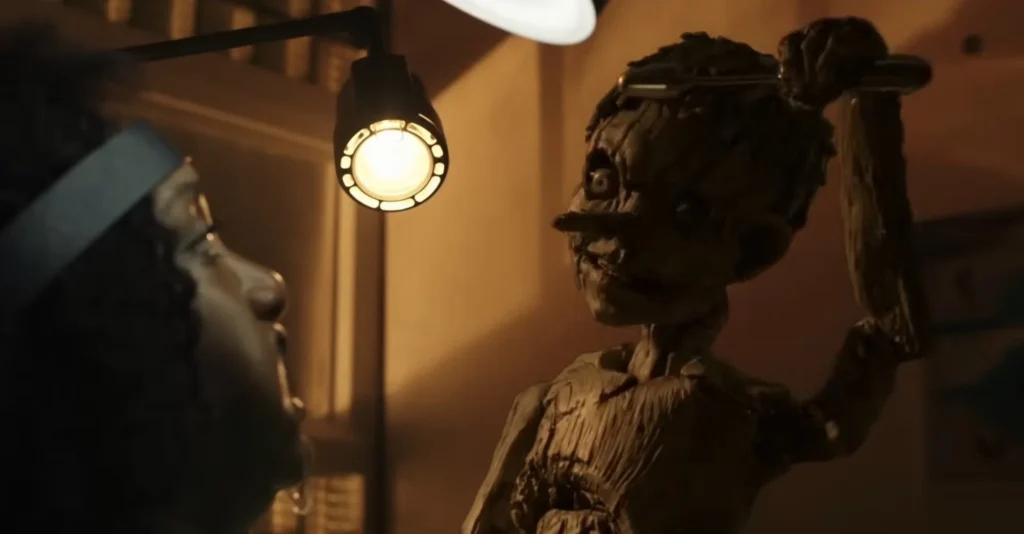
Speaking of those younger performers, a couple leave a lasting impression long after the credits roll. Cameron Bell is genuinely charming in the lead role and delivers a performance well beyond his years. However, it’s Jude-Evan Lloyd’s vocal performance that stands out above everything else. The way he effortlessly switches from childhood innocence to an absolute menace at the flick of a switch is hugely impressive and suggests an incredibly bright future.
But for every step forward that Pinocchio Unstrung takes, there are equally frustrating elements that quickly pull you back into the reality that you’re watching a low budget TCU production. That’s most obvious in the endless toilet humour, which becomes tiresome after the first five minutes. Couple that with dialogue that is still laughably bad at times and it’s clear there’s a long way to go before any of these films leave a genuinely lasting positive impression.
Overall, despite being something of a mixed bag, this is comfortably the best film in the TCU to date. You’d be forgiven for expecting another contender for one of the worst releases of the year based on the franchise’s previous efforts, but Frake-Waterfield and his team have instead delivered a perfectly serviceable horror film that’s a far better time at the cinema than several of this year’s much bigger genre releases. If this is a sign of what’s to come, then by the time the Poohniverse finally assembles, we might just have a future cult classic on our hands.