
Reviews
Union County
Movies about addiction and recovery aren’t exactly a new premise, but Union County highlights just how vital they still are by raising awareness and questioning whether the system in place is truly doing all it can to support those most affected. To the film’s credit, it doesn’t shy away from depicting the many hurdles and setbacks individuals face, while also showing the opportunities presented to them in moments of need. It achieves this by following a real-life programme with real participants in Ohio, offering an incredibly poignant and effective look at the path to recovery.
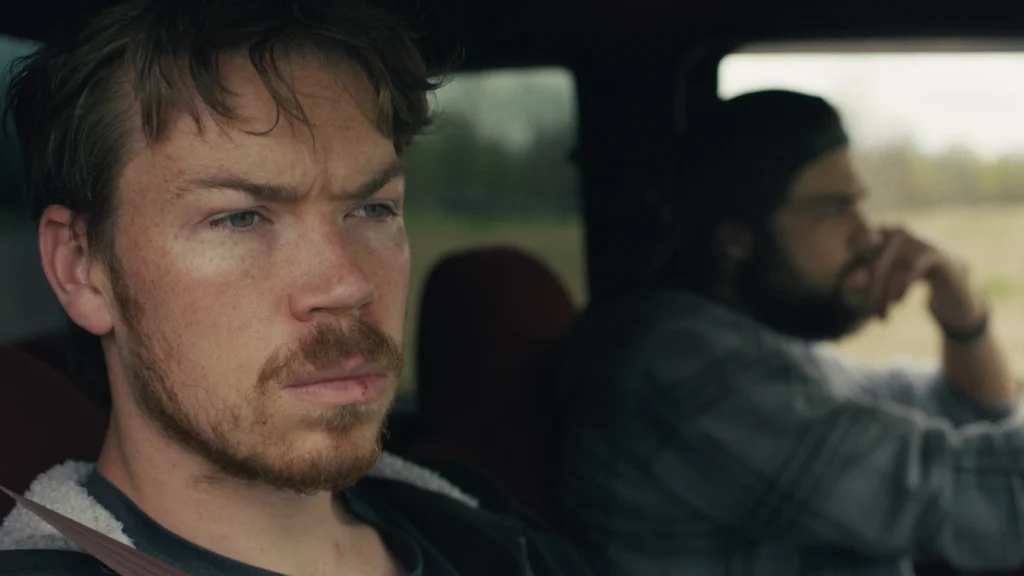
The movie is centred on Cody Parsons (Will Poulter) as he begins the long road ahead after entering a court-mandated programme that requires him to attend regular meetings, track his sobriety, and slowly reintegrate into society under court supervision. His brother Jack (Noah Centineo) is also enrolled in the programme, but on the surface his chippy demeanour and relatively healthier appearance suggest he is further along in his recovery journey than Cody.
With no viable place to live beyond his car and his only possessions essentially being the clothes on his back, Cody is helped by Jack to secure a job in order to get himself somewhat back on his feet. There’s a palpable sense of monotony as he tries to avoid temptation while stuck in the cycle of work, court, sleep, repeat. Don’t mess around, don’t make mistakes, and you’ll be ok. Of course, that’s not how it plays out. Both brothers frustratingly break programme rules, something Jack has done one too many times, resulting in him being sent to an intensive care facility. Cody, rather sadly, ends up taking over Jack’s old room at a programme-owned sober house.
It’s clear from the outset that the court programme and round circle meetings are genuinely beneficial for those involved, with the way they are shot carrying a remarkably similar feel to Sing Sing. The workers within the programme truly try to move heaven and earth for the people they support, but ultimately their hands are tied by the limitations of the system. It raises the question of whether governments could be doing more to support initiatives like these. While individuals must take responsibility for their own actions and can only be helped if they want it, watching Cody live out of his car while battling such a crisis, simply because shelters are full and the court deems it acceptable, is incredibly hard to watch.
There’s a particularly sobering moment during their separate journeys when Cody rejects one of Jack’s calls, a decision that feels like a genuine turning point, especially for Cody. Every recovering addict, whether it’s drugs, alcohol, or even gambling, can pinpoint the exact moment when the tides begin to change. I can remember the last time I gambled like it was yesterday, knowing exactly when and where it happened. In this story, that rejected call feels like Cody’s equivalent of that moment.
Narratively, not everything works. A romantic subplot feels a little forced at times, though it is understandable given that connection can often act as a catalyst for recovery and given the movies relatively short runtime it can feel like Union County glosses over some issues, but it must be said, writer and director Adam Meeks handles the magnitude of the subject with a great deal of care, and it shows. The messaging is timely and delivered in a deeply emotional way that is bound to resonate with anyone who has been involved in a journey like this, while also making people feel seen. This is especially evident in a later meeting where Will Poulter delivers a phenomenal speech that reinforces the idea that addiction is a 24/7 battle, one that is never truly over, and that each day survived is a small victory in itself.
Speaking of Poulter, his performance is impeccable. Having already received an Emmy nomination for his role in Dopesick, another project tackling the opioid epidemic, it should come as no surprise that he approaches this material with respect and delivers it brilliantly. Centineo, as Jack, makes the most of his smaller role, allowing the audience to feel every rise and fall of his character’s journey. A special mention also has to go to the often underappreciated make-up department, who at times make Poulter look like a shell of himself, which is the highest praise I can offer.
As the film draws to a close, making fantastic use of a road as a metaphor, with Cody faced with either taking the right path or heading back in the direction that led him there in the first place, it becomes abundantly clear that Union County has no interest in a glossy Hollywood ending. Instead, it stays true to its core, presenting a hard-hitting, gritty, and honest depiction of the uncomfortable reality that addiction can affect us all.