Reviews
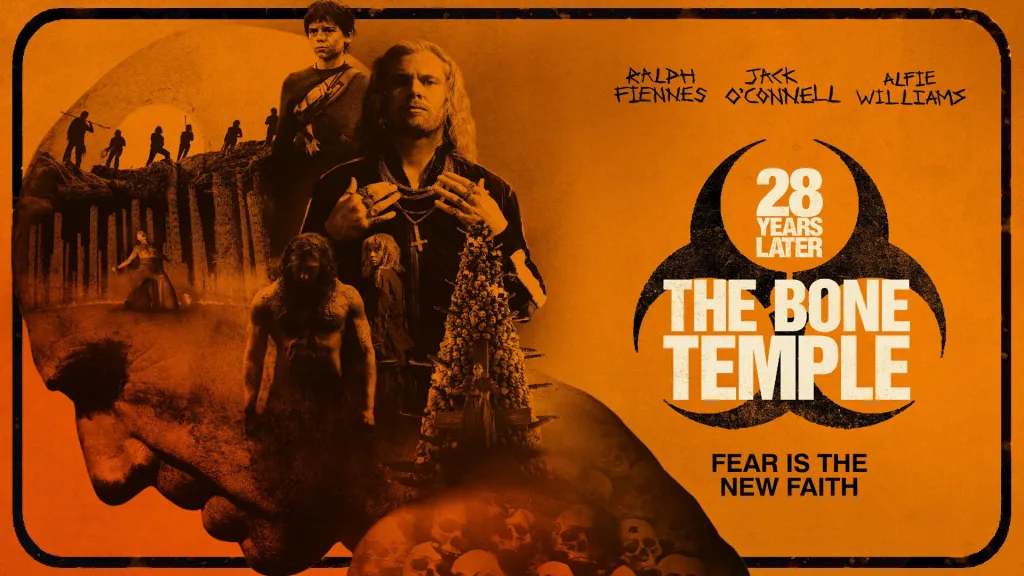
28 years later: The bone temple
Following up on what is arguably the best horror movie of 2025 in 28 Years Later was always going to be an incredibly difficult task, and with 28 Years Later: The Bone Temple coming in the usually cursed month of January, a certain level of apprehension felt justified. Add to that a change in direction with Nia DaCosta now at the helm, you’d be forgiven for feeling slightly apprehensive. Despite all of this, The Bone Temple proves to be another fantastic building block, leaving the franchise just one piece away from becoming one of the greatest horror trilogies of all time. At this stage, the only real obstacle left for the series is the box office, a genuinely frightening prospect that could prevent us from ever seeing a third installment.
28 Years Later: The Bone Temple takes a noticeably different approach to its predecessor, unfolding more like an anthology that follows two distinct stories with a shared sense of inevitability, as though their paths are always destined to cross. For the most part, this structure is extremely rewarding. On one side, Dr Kelson (Ralph Fiennes), a character I had long wanted to know more about, is finally given the spotlight. On the other, the gang of Jimmy’s introduced in the now iconic and unhinged ending of the first film are allowed the space to be properly explored. That added context, particularly in understanding why they are the way they are, elevates the ending of 28 Years Later even further. This approach is not without its drawbacks, however, as Spike (Alfie Williams) and the emotional backbone of the first film, is pushed into a much smaller role.
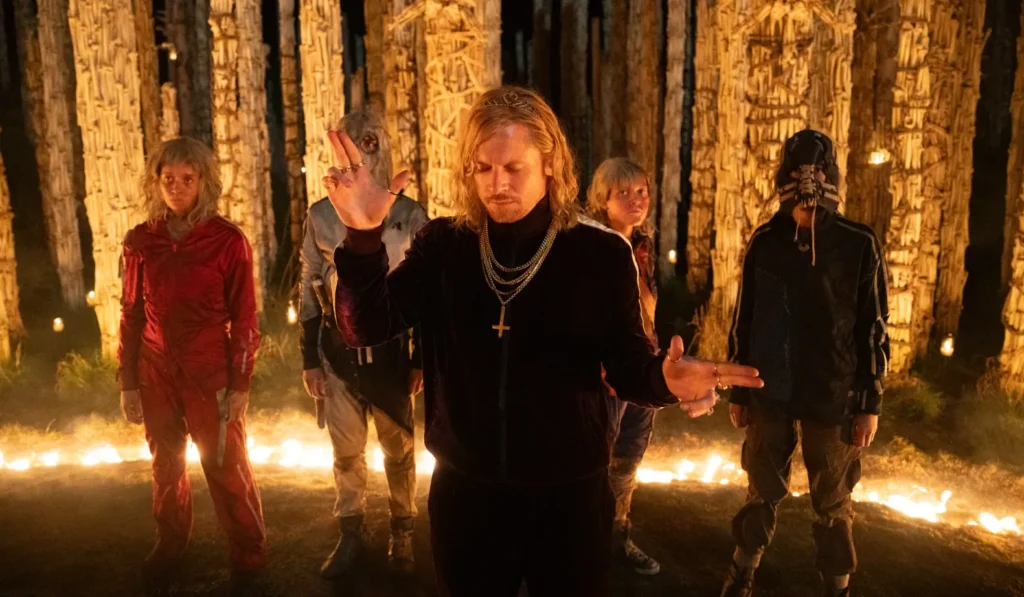
The film opens seemingly moments after the previous entry concludes, with Spike now at the mercy of Sir Jimmy Crystal, played with terrifying conviction by Jack O’Connell. Through Spike’s brutal and gory initiation into the Jimmy’s, or as Crystal refers to them, his fingers, the audience is given its first true glimpse of what is essentially a murder cult of the highest order. The Jimmy’s believe they are carrying out a divine mission from Old Nick, more commonly known as Satan, with Crystal positioned as his one true son and heir. Obedience is absolute, and disobedience is met with swift punishment. The fingers are far less a collective of equals and far more a group of disciples devoted entirely to Crystal.
These Jimmy’s are not just fearless zombie killers. They are predators who hunt down survivors under the guise of charity. That word quickly takes on a horrifying new meaning when Crystal, while casually recounting stories about the Teletubbies, introduces his version of generosity in the form of “tops off.” Each finger is required to quite literally remove the skin from the upper half of their victims. For anyone who felt 28 Years Later held back on gore, that complaint will not apply here.
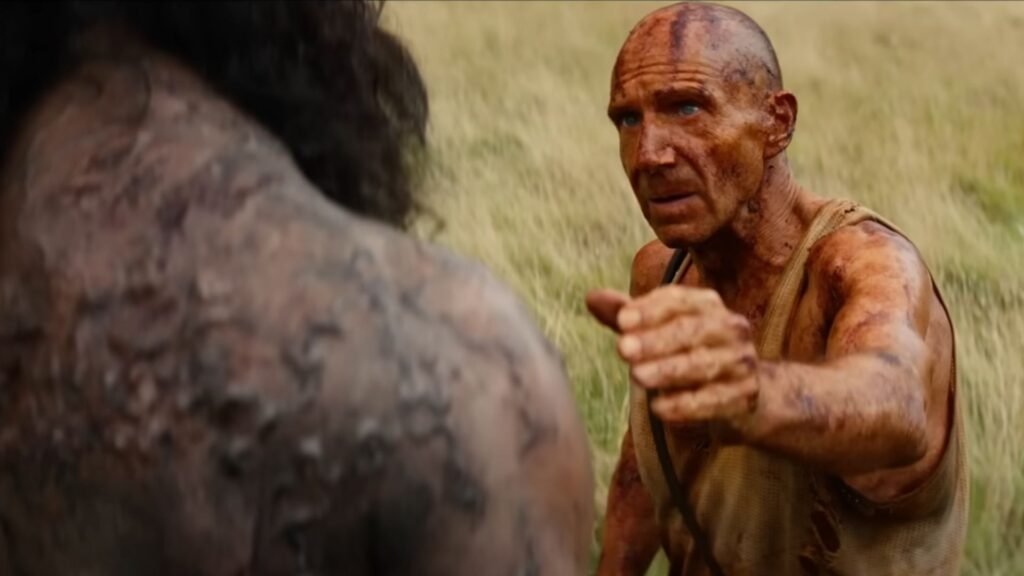
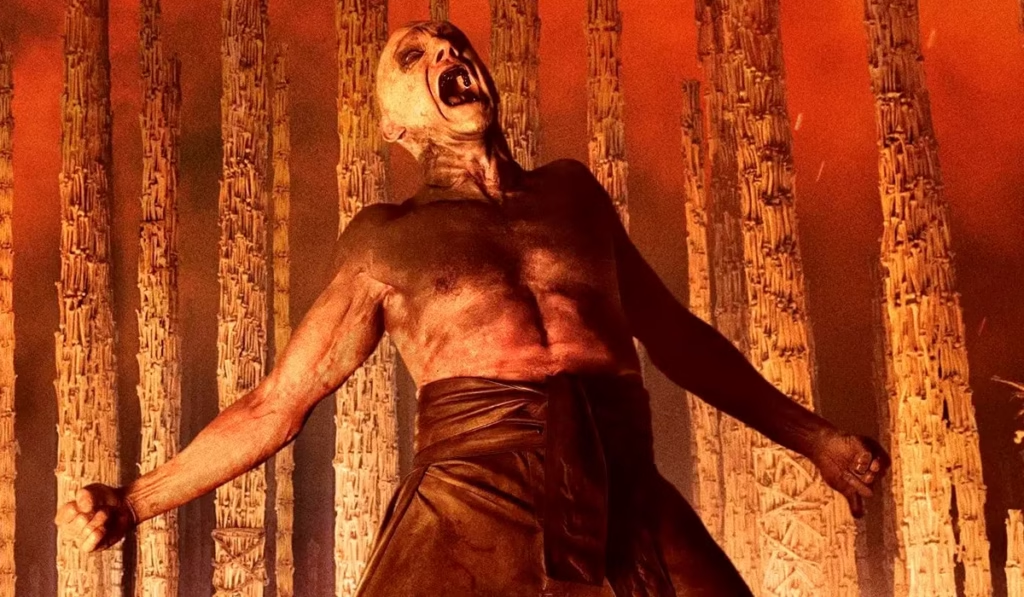
Unbeknownst to the Jimmy’s just a couple of miles away, Dr Kelson continues to live within the confines of his bone temple. Still coated in iodine and building his seemingly endless collection of skulls, his story in this movie is far more poignant and contemplative. It focuses on an unlikely friendship and a mission built around helping the infected rather than killing them. That connection comes in the form of the returning Samson (Chi Lewis Parry), who remains as physically terrifying as ever. Through Samson’s perspective, one breathtaking scene allows the audience to experience the rage virus through his own eyes, offering a chilling but fascinating insight into what the infected view humans as and how the virus is impacting their brains.
This relationship works both ways. The idea established in the first film that Alphas like Samson are not only stronger but also more intelligent is expanded beautifully here. It becomes clear that the tranquilizer darts Kelson uses offer Samson a temporary escape from the rage he is trapped within. These encounters do more than provide Kelson, who appears deeply lonely, with companionship. They allow him to realise that Samson may be capable of understanding what is happening during these calm states. For the first time in a long while, Kelson is given a renewed sense of purpose, rooted in the possibility of a cure and a reason to keep going.
It was only ever a matter of time before the worlds of the Jimmy’s and Kelson collided, and even though that collision feels inevitable from the outset, the way it is executed is fantastically handled. Following a series of harrowing and deeply disturbing events, distrust begins to grow between the fingers and their seemingly untouchable leader, Jimmy Crystal. That fracture is led most notably by Jimmy Ink (Erin Kellyman), who throughout the film acts as a quiet source of support for Spike, clearly struggling with his role as a finger and deliberately avoiding the so called charity altogether.
With his reign of terror under threat and having stumbled upon the awe inspiring Bone Temple, Crystal sees only one way forward. He leads the Jimmy’s directly to Kelson, framing him as Satan himself in a final and desperate attempt to maintain control. It is during this confrontation that The Bone Temple delivers some of the best dialogue I have heard in a horror film in years. The centuries old debate of faith versus science is brought to the forefront and played out as a verbal joust in front of the audience, and watching Ralph Fiennes and Jack O’Connell circle one another in this exchange is set to be one of the defining highlights of the year. Without venturing into spoiler territory, the climax also delivers one of the most memorable scenes of the decade so far, taking the idea of dancing with the devil to an entirely new level.
While Ralph Fiennes and Jack O’Connell are undoubtedly the stars of the show, each delivering performances that at this point feel like an absolute given, equal praise must go to Erin Kellyman and Chi Lewis Parry in their supporting roles. Without both operating at the top of their game, despite the strength of the material, it would have been very easy for the film to unravel and fall short of the heights it ultimately reaches.
The direction of DaCosta is sensational throughout, she is fast becoming a force to be reckoned with and one of my up and coming personal favourites. Returning writer Alex Garland has also crafted one of the strongest horror sequels in recent memory. While it may not hit the same emotional highs as the first film, The Bone Temple offers a surprisingly funny journey layered with sharp political commentary that is sure to make those in power at the White House uncomfortable. The fact that Garland can, through the sheer strength of dialogue alone, make you feel a flicker of sympathy for Sir Jimmy despite his murderous nature speaks volumes about the quality of his writing.
Visually, thanks to Nia DaCosta’s trusted cinematographer Sean Bobbitt, 28 Years Later: The Bone Temple looks just as impressive as its predecessor, delivering some awe inspiring imagery from the very beginning. Likewise, the sound design by Hildur Guðnadóttir is impeccable, creating an immersive environment that audiences can easily get lost in.
This new approach, along with Spike becoming more of a forgotten presence, may not work for everyone. With an abundance of questions still left unanswered, 28 Years Later: The Bone Temple may feel like an extended set up to some. However, as far as horror sequels, or sequels in general, go, it is hard to think of many that not only meet expectations but completely surpass them in the process. Masterpiece may be a strong word to use this early on, but should the third film arrive with the same level of quality, it is a term that will likely become a permanent fixture when describing The Bone Temple.